About

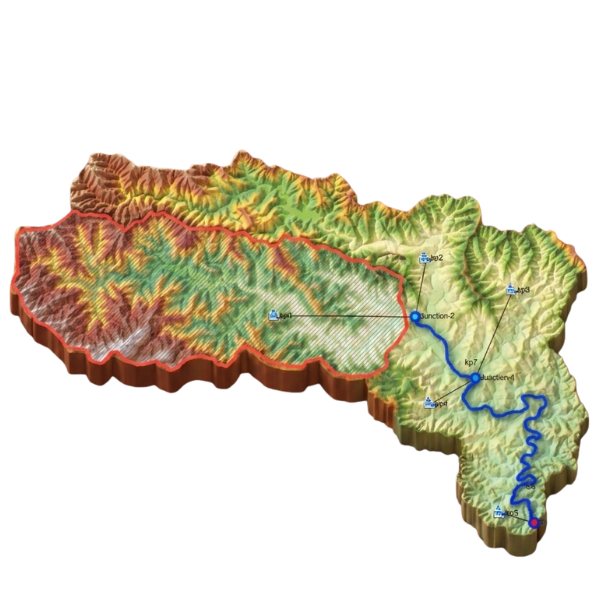
In this 8‑session course, participants build practical, end‑to‑end capability in rainfall–runoff modelling using the free HEC‑HMS (Hydrologic Modeling System) software tool. The course is designed to introduce the core concepts behind hydrologic modelling while guiding participants through catchment delineation, basin model setup, meteorological inputs, and the application of loss, transform, and channel routing methods across a range of catchment types.

Each session blends essential background theory with hands‑on, workshop‑style exercises. Participants work directly with real‑world datasets, develop complete HEC‑HMS model configurations, and explore calibration, parameter selection, and sensitivity testing. The structured, step‑by‑step format ensures participants gain confidence in building, running, and refining models that support robust hydrologic assessments.

By the end of the Masterclass, participants will be able to independently construct and apply HEC‑HMS models for engineering, environmental, and water‑resource applications. The course is ideal for engineers, hydrologists, environmental scientists, and practitioners seeking practical, job‑ready modelling skills using industry‑standard tools.

Details

Date
Thursday, 2 July 2026 - Thursday, 20 August 2026
Time
9:00am (Australia/Sydney; find your local time)
Location
Online
Format 8 x 2-hour sessions + course material & resources
Cost AUD $2,200.00 (INC GST)
Contact Group Booking: For 5 or more contact us: [email protected]
Code LC-27-8-180
Tags

Presenters

Michael Gerlach

West Consultants

Michael Gerlach specialises in the hydrology of arid and semi-arid lands, hydraulic analysis and design, dam safety analysis and preparation of technology transfer manuals. Responsible for performing ... Read more

Krey Price

International Water Training Institute

Educated at the University of California at Berkeley, Krey is a civil engineer and project manager with international experience in water resources. He is engaged in computational modelling, engineeri... Read more

Course Overview

This practical HEC‑HMS training course provides participants with the end-to-end skills in rainfall–runoff models. Through guided, hands‑on workflows, participants develop basin models, apply loss, transform, and routing methods, calibrate parameters, and run sensitivity analysis, building practical capabilities for hydrologic modelling and water‑resource assessment.


Learning Outcomes

In this course, you will be able to:

  • Develop complete HEC‑HMS basin and meteorological models for a range of catchment types.
  • Apply loss, transform, and routing methods to simulate rainfall–runoff processes.
  • Calibrate model parameters and assess model performance using industry‑standard approaches.
  • Run sensitivity analysis to understand model behaviour and refine assumptions.
  • Produce robust hydrologic assessments suitable for engineering and water‑resource applications.


Course Outline

Session 1: Data Preparation & Basin Model Development

(Thursday, 2 July from 9 AM – 11 AM Sydney Time)

  • Introduction.
  • Theory: Program settings and preparing data for use in HEC-HMS.
  • Workshop: Creating a basin model and linking to terrain.
  • Theory: Understanding transform, loss, and routing methods.
  • Workshop: Delineating catchment areas and flow paths.

Session 2: Meteorological Components & Control Specifications

(Thursday, 9 July from 9 AM – 11 AM Sydney Time)

  • Theory: Intensity-Frequency-Duration data.
  • Workshop: Create a basic meteorological model with a frequency storm.
  • Theory: Assigning control specifications.
  • Workshop: Run model and view results.

Session 3: HEC-HMS Sensitivities & Troubleshooting

(Thursday, 16 July from 9 AM – 11 AM Sydney Time)

  • Theory: Spotting errors and instabilities.
  • Workshop: Adjusting basic loss, transform, and routing parameters.
  • Workshop: Set up and run sensitivity cases.

Session 4: Advanced Loss Methods

(Thursday, 23 July from 9 AM – 11 AM Sydney Time)

  • Theory: Deficit and Constant.
  • Theory: Green and Ampt.
  • Theory: SCS Curve Numbers.
  • Theory: Gridded Methods.
  • Workshop: Apply and compare advanced loss methods.

Session 5: Advanced Transform Methods

(Thursday, 30 July from 9 AM – 11 AM Sydney Time)

  • Theory: Clark Unit Hydrograph.
  • Theory: Kinematic Wave.
  • Theory: SCS Unit Hydrograph.
  • Workshop: Configure and compare transform method outputs.

Session 6: Advanced Routing Methods

(Thursday, 6 August from 9 AM – 11 AM Sydney Time)

  • Theory: Kinematic Wave.
  • Theory: Modified Puls.
  • Theory: Muskingum-Cunge.
  • Workshop: Apply routing methods and troubleshoot instabilities.

Session 7: Calibration & Optimisation

(Thursday, 13 August from 9 AM – 11 AM Sydney Time)

  • Theory: Calibration methods.
  • Theory: Discretisation.
  • Workshop: Calibrate a model and assess performance changes.

Session 8: HEC-DSS, Gridded Rainfall & Storm Injector

(Thursday, 20 August from 9 AM – 11 AM Sydney Time)

  • Theory: HEC-DSS, gridded rainfall, and Storm Injector software.
  • Workshop: Import gridded data and run Storm Injector.
  • Theory: 2D diffusion wave routing.
  • Workshop: Apply 2D routing.


Requirements


Format

  • 16+ hours of session recordings with unlimited access for 90-days after the final live session.
  • Pre-and-post-course materials to go through via the AWS learning platform.
  • Homework exercises between the 8 sessions.
  • Additional resources and working model download/s.
  • Ability to ask questions to the presenters at any time through the live sessions and via the learning platform.


Pre-requisites

  • A basic knowledge of rainfall-runoff.
  • AWS Past Webinars:
    • HEC-HMS Part 1

    • HEC-HMS Part 2

    • New and Future HEC-HMS Features

    •  HEC-DSS Introduction


Completion Certification

  • Participants earn CPD hours/points (i.e. with Engineers Australia) for at least 16 hours for the entire course. 
  • On completion of the course participants will be issued with an official QGIS Certificate.


Refund Policy
Frequently Asked Questions (FAQ)