About

Flood frequency analysis forms the foundation of flood estimation, infrastructure design and floodplain management. However, are the statistical models underpinning current practice still the most appropriate in light of non-stationarity and climate trends?

This webinar explores emerging research that questions the suitability of the Log-Pearson Type III (LP3) and Generalised Extreme Value (GEV) distributions for flood frequency analysis, using a physical basis to guide the selected distribution. Drawing on extensive eastern Australian case studies, attendees will gain insight into a new empirical approach that examines the behaviour of extreme floods and introduces an alternative modelling framework with important implications for predictive uncertainty, regionalisation and future professional practice.

Details

Date
Wednesday, 30 September 2026
Time
1:00pm (Australia/Adelaide; find your local time)
Resources Webcasts and other documents will be available here
Tags

Presenters

George Kuczera

University of Newcastle
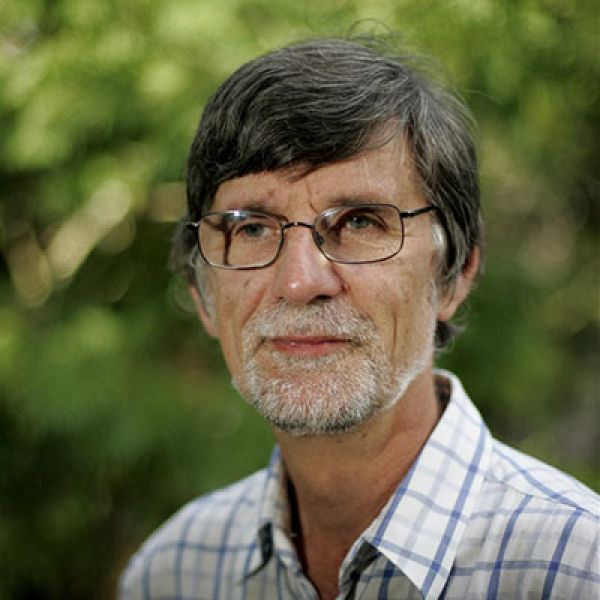
Emeritus Professor Kuczera is recognised as a world authority on the theory and application of Bayesian statistical methods in hydrology and water resources. His research addresses the fundamental pro... Read more

Panel Members

Mark Babister

WMAwater

Mark is a national leader in floodplain management and analysis. Mark has successfully completed numerous hydrologic, hydraulic, floodplain management, infrastructure and dam studies. Mark’s clear, ... Read more

Monique Retallick

WMAwater

Monique has 12 years’ experience in hydrology, 2d modelling and design of major waterway openings for road projects particularly on large and coastal rivers. Monique has extensive experience in the... Read more

Haden Smith

USACE, RMC & HydroSmith LLC

Haden Smith is a Lead Engineer with the USACE Risk Management Center, specialising in developing risk methodologies, conducting flood hazard assessments for high-priority dams and levees, and advancin... Read more

Krey Price

International Water Training Institute

Educated at the University of California at Berkeley, Krey is a civil engineer and project manager with international experience in water resources. He is engaged in computational modelling, engineeri... Read more

Flood frequency analysis underpins many important flood risk, infrastructure and planning decisions worldwide. As longer streamflow records become available and statistical techniques continue to evolve, there is increasing opportunity to revisit some of the fundamental assumptions that have guided hydrological practice for decades.

In this technical webinar, Professor George Kuczera will present recent research examining the performance of the Log-Pearson Type III (LP3) and Generalised Extreme Value (GEV) distributions, are currently recommended and widely used for flood frequency analysis in Australia and internationally. Drawing on empirical evidence from long-term streamflow records across Queensland and New South Wales, George will discuss why model behaviour beyond the observed record deserves just as much attention as goodness-of-fit to historical data.

The webinar will introduce a new empirical testing approach for evaluating the representation of extreme floods and discuss evidence suggesting that smaller annual maximum flows and larger flood events may arise from different flood-generating processes. These findings have potential implications for predictive uncertainty, regionalisation, model selection and the future direction around flood frequency analysis practice.

Rather than focusing on specific software applications, this webinar will examine the underlying statistical assumptions that support contemporary flood frequency analysis and encourage discussion around how new evidence may influence future practice in Australia and worldwide.

The presentation will conclude with an extended Q&A and panel discussion, providing attendees with the opportunity to explore the practical implications of this emerging research with leading practitioners and researchers.

Webinar Topics

  • Why flood frequency model selection matters
  • Revisiting the assumptions behind LP3 and GEV
  • Why goodness-of-fit alone is not enough
  • Understanding predictive uncertainty beyond the observed record
  • New empirical evidence from eastern Australian catchments
  • Why smaller and larger flood events may be driven by different processes
  • Implications for regionalisation and Australian Rainfall and Runoff practice
  • Audience Q&A and expert panel discussion

Who Should Attend?

This webinar will be particularly valuable for:

  • Hydrologists
  • Flood engineers
  • Hydraulic and hydrologic modellers
  • Australian Rainfall and Runoff practitioners
  • Local government flood and drainage engineers
  • State government agencies
  • Water utilities
  • Engineering and environmental consultancies
  • Researchers and postgraduate students working in hydrology, flood estimation and flood risk management

Prior Knowledge

This webinar assumes attendees have a basic understanding of flood frequency analysis and is intended for practitioners already working with flood estimation methods or seeking to deepen their understanding of contemporary research and practice.