About

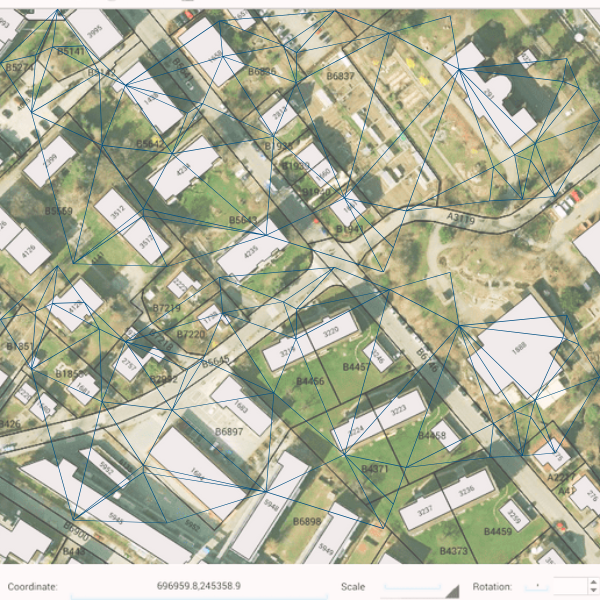
In this 8‑session course, participants will learn how to delineate streams and (sub)catchments from digital elevation models with confidence and precision. Guided step by step by expert presenters, participants will explore the tools and workflows that transform raw terrain data into meaningful hydrological insights. Working directly with DEMs, participants will build practical skills in identifying flow paths and defining catchment boundaries that form the foundation of water modelling and analysis.

The course goes beyond delineation to introduce key catchment properties, including hypsometric curves, concentration time, longitudinal profiles, bifurcation ratios, drainage density, and unit hydrographs. These metrics deepen understanding of catchment behaviour and hydrological processes, equipping participants with techniques widely applied in both research and professional practice.

Throughout the Masterclass, participants will also learn to produce clear and informative catchment maps, visualise flow directions with arrows in 2D and 3D, and represent catchment dimensions effectively. By the end of the course, participants will be able to combine technical rigour with cartographic clarity to communicate hydrological patterns with confidence.

Details

Date
Wednesday, 15 April 2026 - Wednesday, 3 June 2026
Time
3:00pm (Australia/Sydney; find your local time)
Location
Online
Format x8, 2hour recordings; pre and post course materials to go through via the learning platform
Cost AUD $1,995.00 (INC GST)
Code LC-26-8-170
Contact training@awschool.com.au
Tags

Presenters

Hans van der Kwast

QWAST

Hans van der Kwast has more than 20 years of experience with GIS and Remote Sensing in education and projects, offering consultancy, training and coaching in open source GIS. He is an active member in... Read more

Kurt Menke

Septima

A former archaeologist and ex-GISP, Kurt Menke is a geospatial generalist based out of Frederiksværk, Denmark. He received a Master’s degree in Geography from the University of New Mexico in 2000. ... Read more

Panel Members

Krey Price

International Water Training Institute

Educated at the University of California at Berkeley, Krey is a civil engineer and project manager with international experience in water resources. He is engaged in computational modelling, engineeri... Read more

Course Overview

This practical QGIS training course provides participants with the skills to transform digital elevation models into meaningful hydrological insights. Through guided, hands‑on workflows, participants will derive key hydrological properties including hypsometric curves, drainage density, and unit hydrographs, and produce clear 2D and 3D visualisations, building practical capabilities essential for water modelling, spatial analysis, and hydrological interpretation.


Learning Outcomes

In this course, you will be able to:

  • Apply QGIS workflows to delineate streams and (sub)catchments from digital elevation models.
  • Derive and interpret hydrological properties such as hypsometric curves, concentration time, bifurcation ratio, drainage density, and unit hydrographs.
  • Create and style catchment maps that effectively communicate flow directions, boundaries, and dimensions in both 2D and 3D.
  • Generate longitudinal profiles and visualisations to analyse catchment behaviour and support water modelling studies.
  • Integrate cartographic clarity with technical analysis to present hydrological data in accessible, professional formats.


Course Outline

Session 1: Getting started with QGIS for Hydrology

(Wednesday, 15 April from 3 PM – 5 PM Sydney Time)

  • Theoretical background.
  • Installing the PCRaster Tools plugin.
  • Calculating the flow direction.
  • Styling the flow direction in 2D and 3D.

Session 2: Derive the Stream Network and Delineate a Catchment

(Wednesday, 22 April from 3 PM – 5 PM Sydney Time)

  • Calculate Strahler Orders.
  • Calculate flow accumulation.
  • Calculate channel network.
  • Delineate catchment and subcatchments.

Session 3: Craft a Catchment Map

(Wednesday, 29 April from 3 PM – 5 PM Sydney Time)

  • Styling GIS data.
  • Creating an inverted polygon shapeburst fill.
  • Setting up the print layout.
  • Creating a locator map.

Session 4: Catchment and River Geometry

(Wednesday, 6 May from 3 PM – 5 PM Sydney Time)

  • Calculate maximum width and length of a catchment.
  • Calculate basin length.
  • Derive the longest stream in a river network.

Session 5: Calculate Time of Concentration of a River

(Wednesday, 13 May from 3 PM – 5 PM Sydney Time)

  • Kirpich Equation.
  • Bransby-Williams Equation.
  • Giandotti Equation.
  • California Culvert Practice.
  • Passini/Ventura Equation.

Session 6: Calculate Morphometric Variables

(Wednesday, 20 May from 3 PM – 5 PM Sydney Time)

  • Bifurcation Ratio.
  • Drainage Density.
  • Hypsometric Curve.

Session 7: Derive a Unit Hydrograph

(Wednesday, 27 May from 3 PM – 5 PM Sydney Time)

  • Calculate discharge.
  • Calculate travel time.
  • Create a Lookup table from a Raster Attribute Table.
  • RasterDataPlotting plugin.

Session 8: Plugins and Automisation

(Wednesday, 3 June from 3 PM – 5 PM Sydney Time)

  • Graphical Models in the QGIS Resources Hub.
  • ArcGeek Plugin.
  • PyQGIS and Processing Scripts.


Requirements

  • Windows 11 OS is recommended.
  • A computer with at least 8GB RAM (16GB recommended).
  • A good internet connection.
  • QGIS 3.44.X to introduce you to the latest functionalities available from the Long Term Release (LTR): https://qgis.org/download/


Format

  • 16+ hours of session recordings with unlimited access for 90-days.
  • Pre-and-post-course materials to go through via the AWS learning platform.
  • Homework exercises between the 8 sessions.
  • Additional resources and working model download/s.
  • Ability to ask questions to the presenters at any time through the live sessions and via the learning platform.


Pre-requisites

  • A basic knowledge of GIS, QGIS and hydrology is recommended but not essential.


Completion Certification

  • Participants earn CPD hours/points (i.e. with Engineers Australia) for at least 16 hours for the entire course. 
  • On completion of the course attendees will be issued with a Certificate of Completion. 


Refund Policy
Frequently Asked Questions (FAQ)